CFTI Experiencer Metadata Research Project
Overview
The Metadata Project is CFTI’s effort to reintroduce epistemic and academic rigor to a field of study rarely taken seriously by science and academia. Even though experiencer accounts, archival collections, and historical case files contain extraordinary human testimony, the discourse surrounding them has been shaped by stigma, speculation, and the interpretive drift that arises whenever a culture confronts the unknown. Rather than asking what these encounters mean or who their agents might be, the Metadata Project poses a more fundamental question: What is actually present in the data?
By structuring, tagging, and analyzing thousands of archival narratives across researchers, eras, and worldviews, we aim to create a neutral, high-fidelity foundation for future scholarship—one that allows patterns to be examined without presupposing cosmology, ontology, or belief. The goal is not to prove NHI visitors or adjudicate interpretations, but to build the first rigorous map of the narrative terrain itself.

-
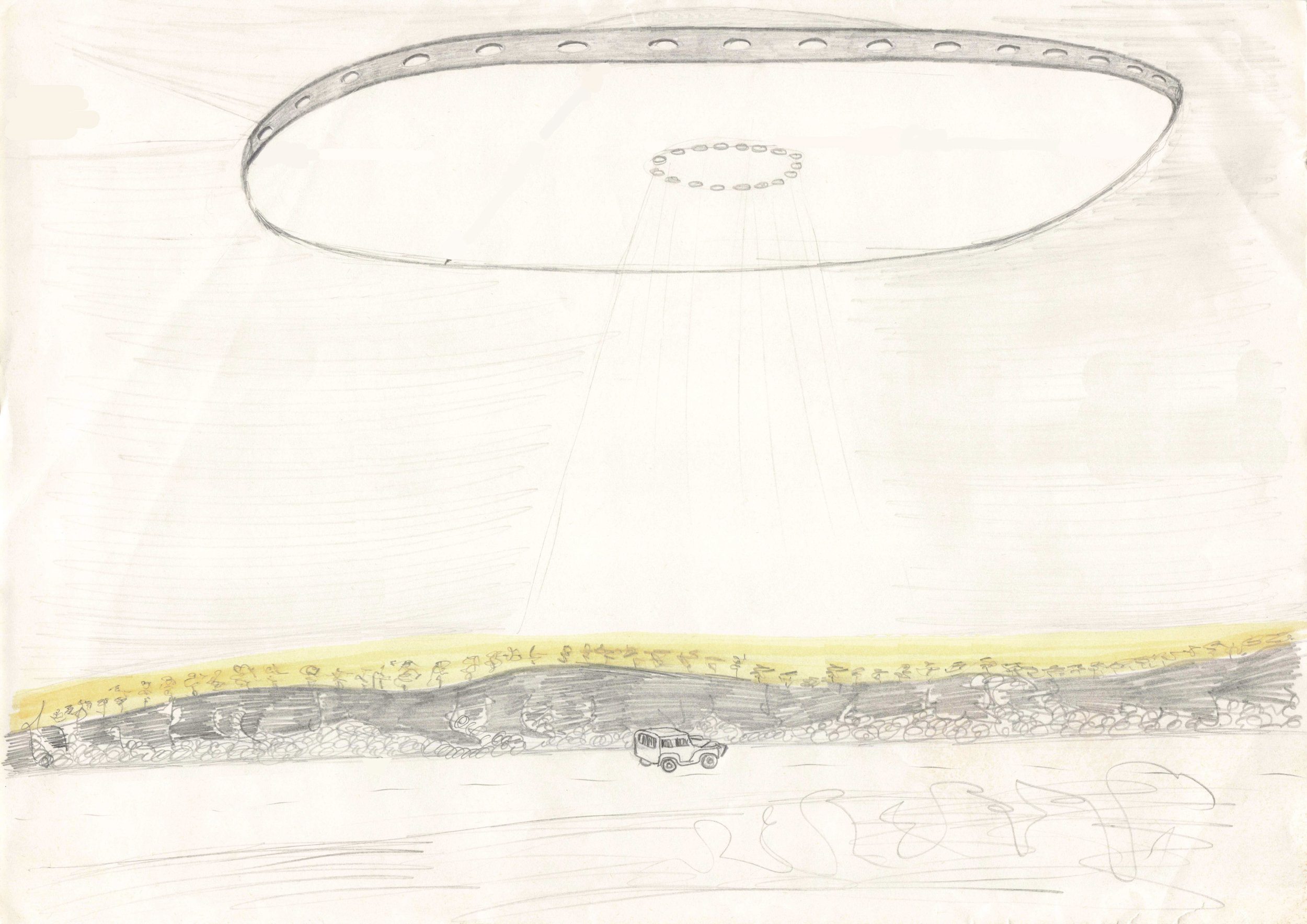
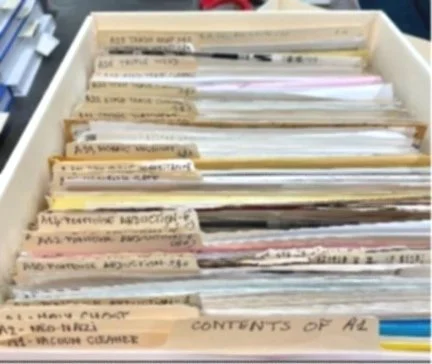
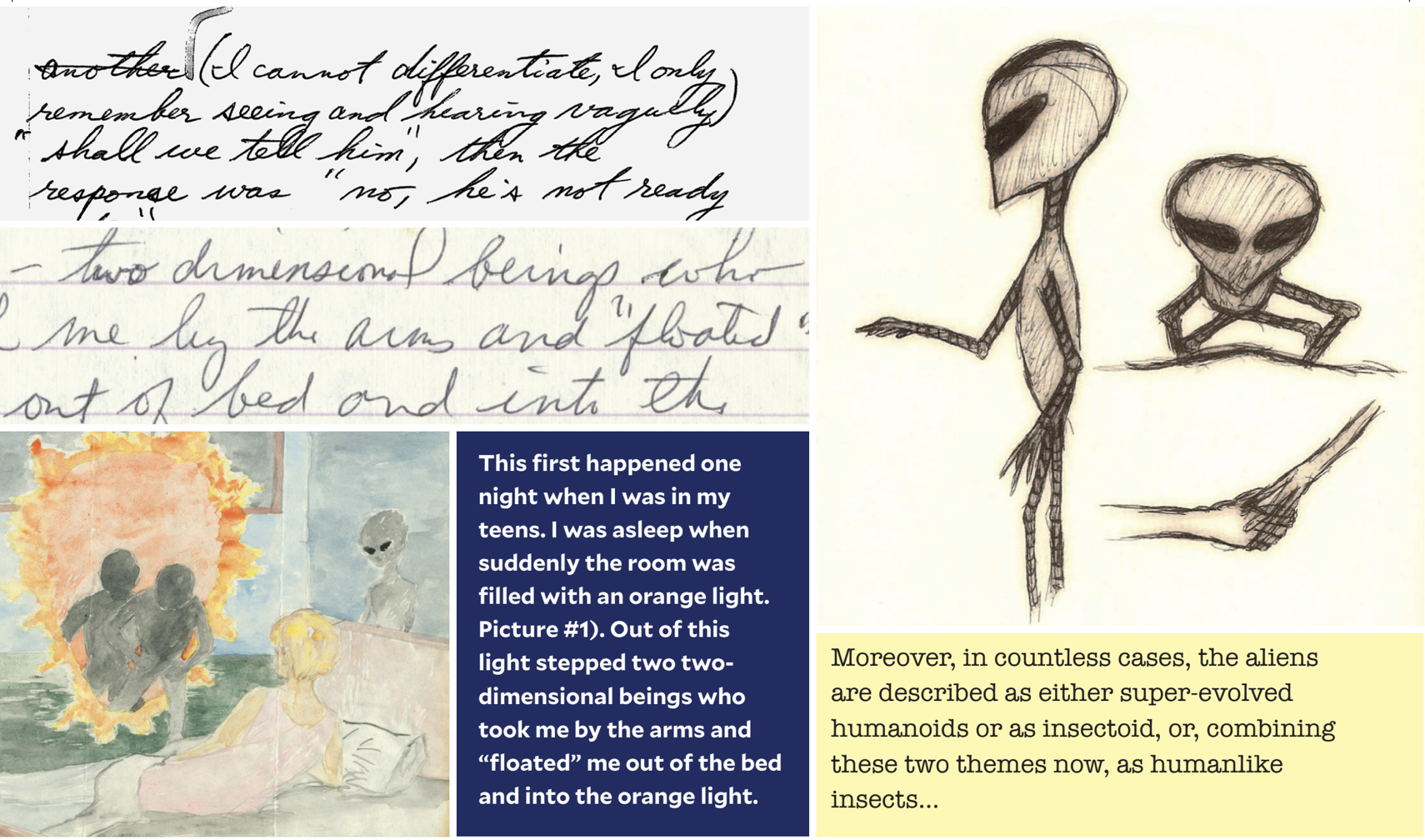
At its core, the Metadata Project converts thousands of archival documents—letters, transcripts, field notes, questionnaires, drawings, and research files—into structured, research-ready data. Our team of archivists, scholars, experiencers, and AI agents is building the computational environment needed to identify and define the key motifs, experiential elements, emotional registers, physiological effects, symbolic patterns, and contextual variables that appear across these materials.
Once this architecture is in place, the corpus can be coded, tagged, and responsibly anonymized. Only then does large-scale pattern recognition become possible: identifying consistencies and divergences across our corpus—not to collapse these narratives into a single interpretation, but to make their inherent complexity intelligible.
This approach preserves the qualitative depth of the humanities while enabling the analytic reach of structured data, creating a foundation on which mature scholarship can finally grow.
-
The scale and complexity of these archives exceed what any human research team could systematically analyze. Tens of thousands of documents—spanning decades, investigators, and interpretive traditions—form a landscape that is extraordinarily rich and equally difficult to navigate. AI does not replace human judgment; it extends our cognitive reach, increasing the speed, scale, and comparative scope of analysis so that patterns long buried in the archives can finally be seen.
In practice, AI helps surface linguistic, emotional, temporal, symbolic, and physiological patterns that would otherwise remain invisible. But these findings only become meaningful when interpreted through humanistic, ethical, and experiential lenses. This collaboration allows us to distinguish what is commonly reported from what is narratively elaborated, giving us a way to honor experiencers’ voices while maintaining epistemic rigor.
Crucially, AI enables cross-archive comparison without collapsing difference. It helps us see where narratives converge, where they diverge, and where new categories of experience may be emerging. Used responsibly, it becomes a tool for clarification rather than speculation—supporting the shift from anecdote-driven discourse to a cumulative, research-based body of knowledge.
In a moment when misinformation, cultural mythology, and interpretive drift create a high noise-to-signal ratio, AI-assisted analysis becomes a necessary methodological safeguard. It allows us to build a shared empirical foundation without predetermining the nature of the phenomenon itself.
-
Public awareness of unidentified anomalous phenomena (UAP) has advanced more in the last five years than in the previous seventy. Congressional hearings, whistleblower testimony, and serious investigative journalism have moved the subject from the cultural margins into the mainstream consciousness. Yet this shift has exposed a striking gap: the US government, its national security apparatus, and our academic institutions are not yet prepared to support a process of disclosure that foregrounds knowledge from those who may very well have the most insight to offer about the intentions of our NHI visitors.
The current discourse is dominated by threat narratives and sensor-based data, while the largest body of evidence—the human experiences recorded across decades of letters, transcripts, case files, and drawings—remains largely unexamined. As public interest grows, and pressure increases on governments, scientists, academics, and media alike, the absence of a coherent evidentiary foundation leaves the field vulnerable to speculation, distortion, and premature conclusions.
This is not a theoretical risk. If the first official story the world receives about the phenomenon is defined by an incomplete dataset, national security objectives, and the motivations of private contractors, it will mislead policy, scholarship, and public understanding of the phenomenon for at least a generation.
That means we have but a brief window to integrate into the official discourse, the core statistical and phenomenological patterns of human encounters with advanced non-human intelligence. Thankfully, recent advances in AI-assisted research give us the ability to study experiencer materials at a scale equal to their complexity.
Putting these tools to immediate use, we can build an empirical foundation that has been missing since the phenomenon first entered into the public discourse..
This moment demands precisely this kind of work: methodologically rigorous, transparent, and capacious enough to honor the full range of human testimony. Without it, the cultural narrative will solidify in accordance with the objectives of the military industrial complex and the interests of private capital, without the eye-witness perspectives required for humankind to develop a balanced understanding of the contact phenomenon.
-
Creating a structured, ethically curated body of experiencer data does far more than organize a dispersed historical record. It reshapes the conditions under which this subject can be studied, discussed, and understood. For the first time, scholars, policymakers, experiencers, journalists, and the public will have access to a reliable evidentiary base for examining the human dimensions of the phenomenon.
With this foundation in place, several transformative possibilities emerge:
1. A Public Narrative That Reflects the Full Phenomenology
Current discourse centers on military encounters, sensor data, and debates about craft and propulsion. The human experiences—contact, communication, physiological effects, psychological impact, relational patterns, and existential or spiritual transformation—rarely enter the frame.
By making these materials visible, searchable, and responsibly contextualized, a fuller picture becomes available: not a belief system or speculation, but the documented texture of lived experience across decades. This shifts the public conversation from “Is this a threat?” to “What is happening to people, and what does it mean?”
2. A Foundation for Interdisciplinary Scholarship
Researchers who wish to study this domain currently face significant barriers: stigma, lack of access, absence of structure, and no shared evidentiary language. The Metadata Project addresses these constraints by providing:
· primary sources
· standardized tags
· documented provenance
· anonymized, ethically handled transcripts
· the ability to trace patterns across time, culture, and identity
This opens the door to rigorous scholarship in religious studies, anthropology, psychology, trauma studies, the history of science, digital humanities, philosophy of mind, and even aerospace studies when relevant. A true research field can grow where none has been institutionally possible.
3. Responsible, Evidence-Grounded AI Collaboration
With a structured corpus and ongoing oversight by the CFTI research team, AI becomes an instrument of clarity rather than a source of noise. It enables the detection of motifs, clusters, anomalies, and outliers—patterns too extensive for humans to identify unaided. These patterns are then interpreted within humanistic and ethical frameworks, ensuring that AI amplifies rigor rather than confabulation.
In this configuration, AI becomes a partner in disciplined inquiry, helping the field mature from anecdotal discourse into cumulative knowledge.
4. Evidence-Based Journalism, Education, and Policy
When narratives are built on rumor or selective testimony, public understanding becomes fragmented or polarized. When they are grounded in transparent, structured data, the conversation becomes more measured.
This shift matters. It restores dignity to experiencers, reduces sensationalism, and enables policymakers to understand the human significance of the phenomenon rather than relying solely on military briefings or speculative claims.
5. A New Horizon for Human Understanding
Large-scale patterns in experiencer data challenge inherited assumptions about consciousness, non-local communication, agency, perception, and the nature of reality—not by advancing new doctrines, but by expanding the range of questions we are able to ask. This creates space for empirically grounded interpretations that are attentive to complexity and open to new cosmological possibilities.
In this way, the project supports a more mature cultural conversation—one guided by evidence, ethics, and an honest reckoning with the limits of our current models.
-
Item description